KEY TAKEAWAYS
Many retirees who are already unhappy with Medicare should expect higher costs in the coming year.
A federal subsidy that reduced stand-alone drug plan premiums by an average of $16 per month is ending.
Retirees who are already frustrated with Medicare expenses may be facing even higher bills next year.
In a recent eHealth survey, 42% of Medicare beneficiaries said they were dissatisfied with at least one aspect of their coverage. Premiums were the most common complaint, followed by high out-of-pocket costs.
Many retirees are also dealing with expenses they did not expect. Roughly one-third of Medicare beneficiaries, including Americans age 65 and older as well as younger people with disabilities, told eHealth that their out-of-pocket costs were higher than anticipated.
Why This Matters
Most retirees rely on fixed incomes, usually a combination of Social Security benefits and withdrawals from retirement savings. While Social Security benefits will increase 3.6%, Medicare costs are rising faster than those checks.
Rising Medicare Part B premiums have added to the pressure. In 2026, the standard Part B premium rose by $17.90 to $202.90, the second-largest dollar increase in the program’s history. The 2027 premium has not yet been announced, but the Medicare trustees project it will reach $209.50.
To help offset Part B costs, the Trump administration sent one-time $90 payments to about 20.8 million Original Medicare enrollees. Medicare Advantage members, people whose premiums are paid by Medicaid, and higher earners subject to income-related surcharges were not eligible.
As a result, dissatisfaction with Medicare expenses has climbed. A 2026 survey by The Senior Citizens League, a nonpartisan advocacy group for older Americans, found that 41% of seniors were unhappy with what Medicare costs them, up 10 percentage points from the previous year.
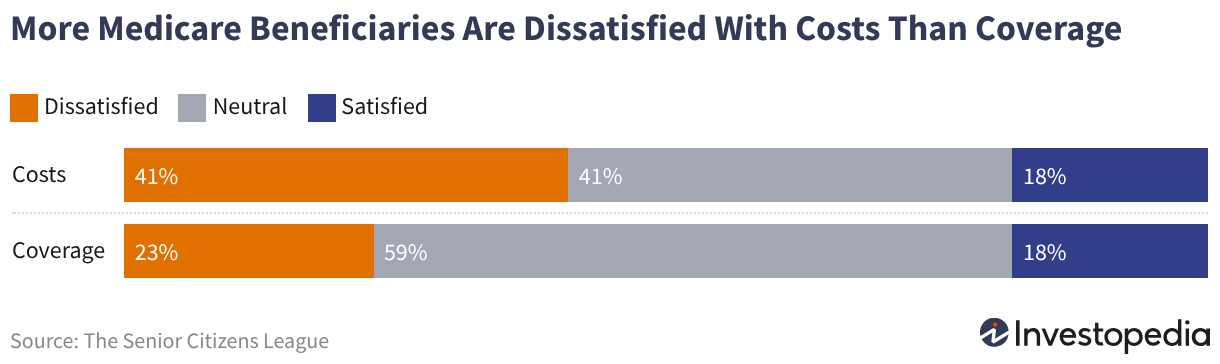
At the same time, self-reported health spending has eased. In the 2025 survey, the median senior said they spent between $401 and $600 per month on healthcare over the previous year; in the latest survey, that figure fell to between $201 and $400.
Still, the survey was fielded early in the year, and TSCL said the drop in healthcare costs and improvement in satisfaction may reflect a lower cap on out-of-pocket prescription drug spending. Medicare Part D first set a hard out-of-pocket drug cap of $2,000 in 2025; it rose to $2,100 in 2026 and will increase to $2,400 in 2027.
Another factor may also be influencing the results. In February, TSCL said a survey showed that 58% of seniors had skipped care to save money, including dental, vision, and hearing services.
The Trump administration is ending a subsidy that had lowered stand-alone Part D premiums by an average of $16 a month in 2026. CMS says the average stand-alone premium is expected to rise by less than $1, to $36 a month, but no zero-premium stand-alone plans will be available in 2027. That change affects about 4 million enrollees who paid nothing in 2026, and some plans, including UnitedHealth’s AARP-branded plans, could see monthly increases of $50 or more for people who do not switch.
In addition, the Part D out-of-pocket cap is increasing by $300 to $2,400, and the maximum deductible will rise by $85 to $700. The 56% of Part D enrollees who receive drug coverage through Medicare Advantage are not affected by the end of the subsidy, and their average drug premium is projected to fall to $7.
Overall, Medicare Part D premiums are expected to rise as government premium-stabilization subsidies end. Beneficiaries will likely pay about $16 more each month, or nearly $200 more a year, for drug coverage.
“In general, any increase in out-of-pocket costs could lower satisfaction levels, regardless of what type of Medicare coverage a person has,” Whitney Stidom, vice president of consumer enablement at eHealth, said in an email.
She recommended that Medicare Advantage and Part D enrollees review the annual notice-of-change letters they received and compare the plans available in their area before open enrollment ends.
More from Digilifetrends
National Study Finds Colder Weather Is Tied to More Heart Failure Hospitalizations in Older Medicare Patients
A national analysis of Medicare data suggests that colder days are associated with higher odds of hospitalization for heart failure among older adults, while hot days show no…
5 min read · Published 2026-11-03ACA coverage sign-up is now open. What New Mexicans should know
New Mexicans can now sign up for 2027 health insurance coverage through BeWell, the state exchange created under the federal Affordable Care Act.
1 min read · Published 2026-11-03He Made $50,000 Before Retiring at 62, Then Picked Up Tourism-Season Work in Austin. A Little-Known Social Security Rule Can Still Preserve His Monthly Checks
A $50,000 salary before retirement might seem like it would wipe out every Social Security payment for the rest of the year, but a little-known agency exception changes the…
4 min read · Published 2026-11-03