Key Takeaways
Roughly one in five U.S. households headed by a retiree 65 or older lived on less than $2,000 a month in 2025.
Single-person households made up nearly 80% of the 6.6 million retiree households in this category.
The typical household taking in less than $2,000 a month lived on about $15,200 in 2025, which is roughly the poverty line for a single person 65 or older.
More than half of households headed by a retiree 65 or older took in at least $4,000 a month in 2025.
Even with pensions and savings included, a meaningful share of retiree households still live on very modest incomes.
For many retirees, living on less than $2,000 a month usually means living alone: one Social Security check, often a relatively small one, and little else. About 1 in 5 households headed by a retiree 65 or older, or about 6.6 million households, had income below $2,000 a month in 2025, according to an Investopedia analysis of Census Bureau Current Population Survey data. Nearly 4 in 5 of those households were made up of one person.
When two retirees share a household, they can combine two benefit checks, and at least one partner often brings in a pension, part-time earnings, or savings. By contrast, a retiree living alone usually depends on a single Social Security check and little additional income. Married retired couples are rarely in the sub-$2,000-a-month group; only about 7% fall below that level.
Why This Matters to You
A retiree household with less than $2,000 a month is usually a one-person household. That leaves no second check to absorb a rent increase or a higher Medicare premium.
Who Lives on Less Than $2,000 a Month
More than half of households headed by a retiree 65 or older took in at least $4,000 a month in 2025, and about a quarter brought in between $2,000 and $3,999. The remaining 21% lived on less than $2,000 a month.
The typical household in that lowest-income group lived on about $1,270 a month, just below the Census Bureau’s poverty threshold of $15,440 a year for a person 65 or older living alone.
The typical retiree household overall had much higher income, at about $4,400 a month. Among households headed by a retiree 75 or older, median income slipped to about $4,000 a month, compared with roughly $4,900 a month for households headed by someone ages 65 to 74.
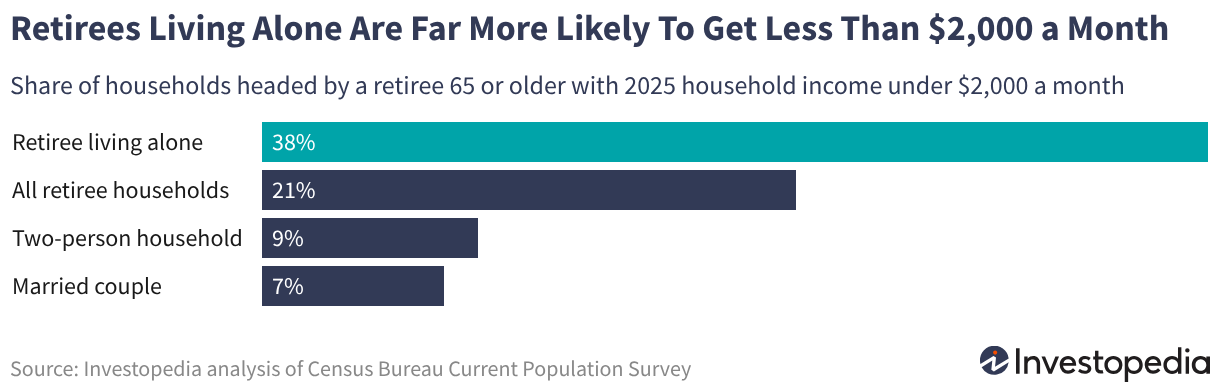
The squeeze is more severe for retirees living by themselves, according to Investopedia's analysis.
Married retirees are uncommon in the group taking in less than $2,000 a month. About 7% of married retirees fall below that level, compared with more than a third of retirees who live alone. Married retirees had a median annual household income of about $83,000, more than twice the roughly $35,000 for retirees heading households on their own.
Retired women living alone had a median income of about $2,400 a month in 2025, while retired men living alone had a median income of about $2,700 a month. About 39% of women living alone and 35% of men living alone made less than $2,000 a month.
Age appears to matter less: the share below $2,000 is about the same whether the householder is between 65 and 74 or older than 75.
Social Security Remains a Lifeline for Lower-Income Retirees
For many retirees, a Social Security payment is only one part of household income, alongside a pension, part-time pay, or withdrawals from retirement savings.
Still, nearly 3 in 4 retirees in households under $2,000 a month say at least 90% of their own income comes from Social Security and Supplemental Security Income, or SSI. SSI is the federal program for low-income older adults and people with disabilities. For retirees in households bringing in more than $2,000 a month, Social Security makes up about 40% of combined income, according to Census surveys.
The checks themselves are modest, too, according to the Census data. The median retiree in an under-$2,000 household reported about $11,600 in Social Security income, or roughly $970 a month. That compares with about $1,800 a month for retirees in households taking in more than $2,000 a month and the average retired-worker benefit of $2,089 as of September 2026.
However, Census Bureau and Social Security Administration researchers have found that retirees often underreport retirement income. When survey answers were matched with tax filings and Social Security records, 46% of people 65 and older who had received pension or retirement account income reported none of it in the survey.
Read the original article on Investopedia
More from Digilifetrends
How to Help Your Child Build a Financial Foundation
When money is tight, putting money aside for the future can seem impossible. Rent, groceries and bills usually come first, but families may already have a head start when it comes…
5 min read · Published 2026-11-095 Ways to Cut Holiday Shopping Costs and Stress
(Feature Impact) With the holiday season drawing near, careful gift buyers are already planning ahead. Rather than rushing through last-minute shopping and settling for whatever…
3 min read · Published 2026-11-09JetBlue's Higher Bag Fees Bite into a Grandparent's Holiday Trip, but the Social Security COLA Still Goes Further
A $110 round-trip bag fee on JBLU is more than one month's $75 Social Security increase, but it uses only about 12% of the roughly $900 yearly gain.
5 min read · Published 2026-11-09